
Leishmaniasis: What It Is and How to Protect Your Dog
Leishmaniasis is a serious disease that affects both animals and humans. It is caused by a parasite and transmitted through the bite of infected sand flies, small insects that are most active during warm months, especially at dusk and during the night.
In many parts of Southern Europe and the Mediterranean, the disease is already present. With changing environmental conditions, it is becoming more important to understand how it spreads and how it can be prevented.
What is leishmaniasis?
Leishmaniasis is a vector-borne disease, which in this case means it is transmitted by sand flies rather than through direct contact.
Dogs are the main hosts of the parasite and play a central role in the transmission cycle. Because of this, protecting dogs helps break the cycle of the disease, keeping both pets and people safer.
The disease can affect several organs and, if not detected early, can lead to serious health complications.
Why is it becoming more relevant?
Leishmaniasis is no longer considered a limited or localised issue. Several factors are contributing to its wider presence. Rising temperatures and changing climate conditions allow sand flies to survive longer and expand into new regions. At the same time, increased travel and movement of pets make it easier for the disease to spread beyond traditional areas.
As a result, more animals and people are potentially exposed, even in places where the disease was previously uncommon.
How does transmission happen?
The disease is not transmitted by direct contact between dogs or from dogs to humans.
Instead, transmission happens through sand flies. When a sand fly bites an infected dog, it carries the parasite and can pass it on through another bite. This makes controlling exposure to sand flies the most effective way to reduce risk.
Signs you should not ignore
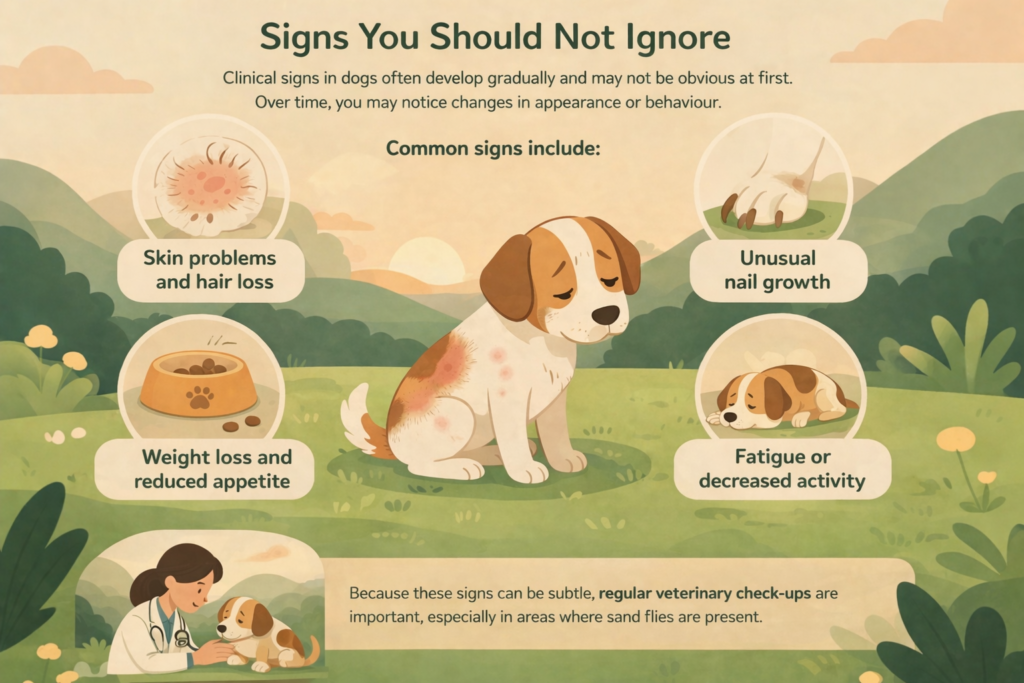
Clinical signs in dogs often develop gradually and may not be obvious at first. Over time, you may notice changes in appearance or behaviour. Common signs include:
- skin problems and hair loss
- weight loss or reduced appetite
- unusual nail growth
- fatigue or decreased activity
Because these signs can be subtle, regular veterinary check-ups are important, especially in areas where sand flies are present.
What you can do to protect your dog
Prevention is based on a few consistent and practical actions. These do not require major changes, but they do require awareness and routine. The most effective measures include:
- using veterinarian-approved insect repellents such as collars or spot-on treatments throughout the active season
- avoiding walks at dusk and keeping dogs indoors at night whenever possible
- maintaining clean outdoor areas (free of cut grass, leaves, tree trunks, or accumulated feces) and protecting sleeping spaces by installing fine-mesh nets on doors and windows
- consulting a veterinarian before travelling to areas where the disease may be present
- scheduling regular testing enables early detection of infection and supports timely treatment
When combined, these steps significantly reduce the chances of exposure.
Why awareness matters
Leishmaniasis is often underestimated, not because it is rare, but because it is not always visible. Many people are unaware of when the risk is highest or how simple actions can prevent infection.
Without timely information, prevention measures may come too late.
How ISMED-CLIM contributes
The ISMED-CLIM project focuses on improving how climate-related health risks, including Leishmaniasis, are understood and managed across the Mediterranean region.
The project develops tools that help dog caregivers respond at the right time. This includes early warning systems that provide alerts when sand fly activity is expected to increase, along with clear and practical recommendations.
By combining scientific data with accessible communication, ISMED-CLIM supports dog caregivers, veterinarians, and communities in taking informed and timely action.
Conclusion
Leishmaniasis is a serious disease, but it can be prevented with the right approach. Awareness, timing, and simple daily decisions make a real difference.
Protecting your dog also means contributing to a wider effort to reduce the spread of the disease.
By staying informed, you can better understand when the risk is higher and take simple, effective steps to protect your family and pets. Subscribe to our newsletter to receive updates, practical guidance, and alerts that help you stay one step ahead.